
10 signs it's time for help at home in Raleigh, NC
And why getting a little help is not 'giving up'.
If you’re starting to wonder whether your mom, dad, or spouse might need extra support at home in Raleigh NC (or nearby), you’re not alone. I’ve been through it myself, both personally and professionally, and I know how emotional it can be.
You want to keep your loved one safe, but you also want to respect their independence. It’s a balancing act. And it helps to know what signs to look for.
It's important to keep in mind (and help your loved one remember, too), that getting a little help at home isn’t about “giving up.” It’s about living well, with more dignity for them and peace of mind for you.
And in our growing city we’re lucky to have good community, local programs for seniors, and Raleigh caregivers who can step in when needed. Read on to learn more!
10 Signs to Prompt a Conversation About Getting Help at Home
- Bills piling up or unopened mail
- Expired food or skipped meals
- Trouble with walking or balance
- Neglected housework or personal hygiene
- Mood or personality changes
- Missed medications or appointments
- Withdrawing from friends or activities
- One spouse/family member doing too much
- Falls or unexplained bruises
- Your gut says something just isn't right
Why Paying Attention Matters
Noticing the subtle changes in what your relative is able to do (or keep up with) sooner rather than later makes it possible to put gentle support in place before it reaches a critical point. That way your loved one can keep doing what they want with dignity: whether it’s a trip to the North Carolina Museum or Art, stopping for a wine tasting at Lowe’s Foods, enjoying a stroll in the Duke Gardens, or simply relaxing in the comfort of their own home!
Let's look a little more closely at ten of the most common signs that a little extra help could improve your loved one's quality of life.
Signs Someone May Need Help at Home
- Bills and/or mail are piling up. If your loved one has always been organized and this seems unusual, it's worth a conversation. Confusion or lack of attention to everyday tasks like paying bills, balancing a checkbook, or even forgetting to open the mail can create challenges if not addressed.
- Changes in the kitchen. Expired food, forgotten meals, or noticeable weight loss? It’s not unusual to find a cupboard full of the same soup or alternatively, no groceries at all.
- Mobility struggles. Trouble climbing steps, feeling unsteady at Harris Teeter, or hesitation about going out at all impact connectedness and quality of life.
- Neglected home or hygiene. Mountains of laundry, dishes left out, or your loved one wearing the same clothes repeatedly. These physical tasks may be draining, or dexterity, balance, or strength may be increasing challenges.
- Mood and personality shifts. Withdrawing from family get-togethers, snapping more easily, or seeming less like themselves? Changes that go on for more than a few weeks often warrant further exploration and attention.
- Difficulty with medications or appointments. Missed doses, confusion with pill bottles, or forgetting doctor visits are important to prevent for their health and quality of life.
- Less social connection. Are they skipping church, missing their book club, or no longer attending favorite senior programs with friends at the Y? Explore why they've lost interest.
- Over-reliance on one person. Is a spouse or adult child carrying more than feels safe or fair? That can erode everyone's energy and quality of life. Even a few hours' support each week can make a real positive impact.
- Falls or unexplained bruises. Even “small” accidents can be a sign that something bigger is going on.
- That gut feeling. Sometimes, you just know something’s off, even if you can’t put your finger on it. Trust that instinct.



Did you know that No Place Like Home Senior Services has been here for help at home in Raleigh, NC all along?
Give us a call at 919-762-0035 or
email us to explore getting help with:
Help with errands,
Appointments & keeping up
companionship, Activities & Interests
maintaining good health & hygiene
tailored quality of life programs
Why is it so hard to talk about getting help at home?
No one wants to feel like they’re being treated like a child. Many older adults fear that accepting help means losing independence. And let’s be honest… love makes these conversations emotional! That’s why how you approach the subject matters just as much as what you say.
Here are some helpful tips for making the talk easier for both of you:
Tips for starting the conversation
- Pick the right moment. Choose a quiet moment with plenty of time, maybe over a cup of coffee at home.
- Lead with care. Instead of “You can’t do this anymore,” try, “I’ve noticed you seem tired lately, and I want to make things easier for you.”
- Share your feelings. Say “I worry about you” rather than “You should.”
- Start small. Just a few hours of caregiver help each week can help, they may not need full-time care right away.
- Focus on the positives. More energy to enjoy the grandkids. More time for hobbies. More peace of mind.
- Remind them they’re not alone. Here in Raleigh, caregivers live right in the community. We’re neighbors, not strangers, and our role is to provide support, not take control.
A final word of encouragement
Needing a hand at home isn’t a weakness, it’s a way for someone to keep living life on their own terms, safely and fully. If you’re starting to notice some of these signs, don’t ignore them. Take the next small step.
If you decide you’d like to have help at home in or around Raleigh, we’re proud to be a local resource that knows the ins and outs of our growing surroundings.
From nearby grocery runs to companionship or daily support, we have experienced, trusted caregivers close by who are ready to step in so your loved one can keep enjoying the home they love, and so you can have peace of mind.

Let's talk it through, together
If you think it may be time for some extra help for your loved one, we’re here to help you explore your options. Home care doesn’t have to be all or nothing, but it is very important that the help you get is from someone you can trust.
Friends may be willing to help, but it’s wise to be cautious to ensure your family’s safety and security.
There’s no cost to talk it through together. So book your Q&A call today.


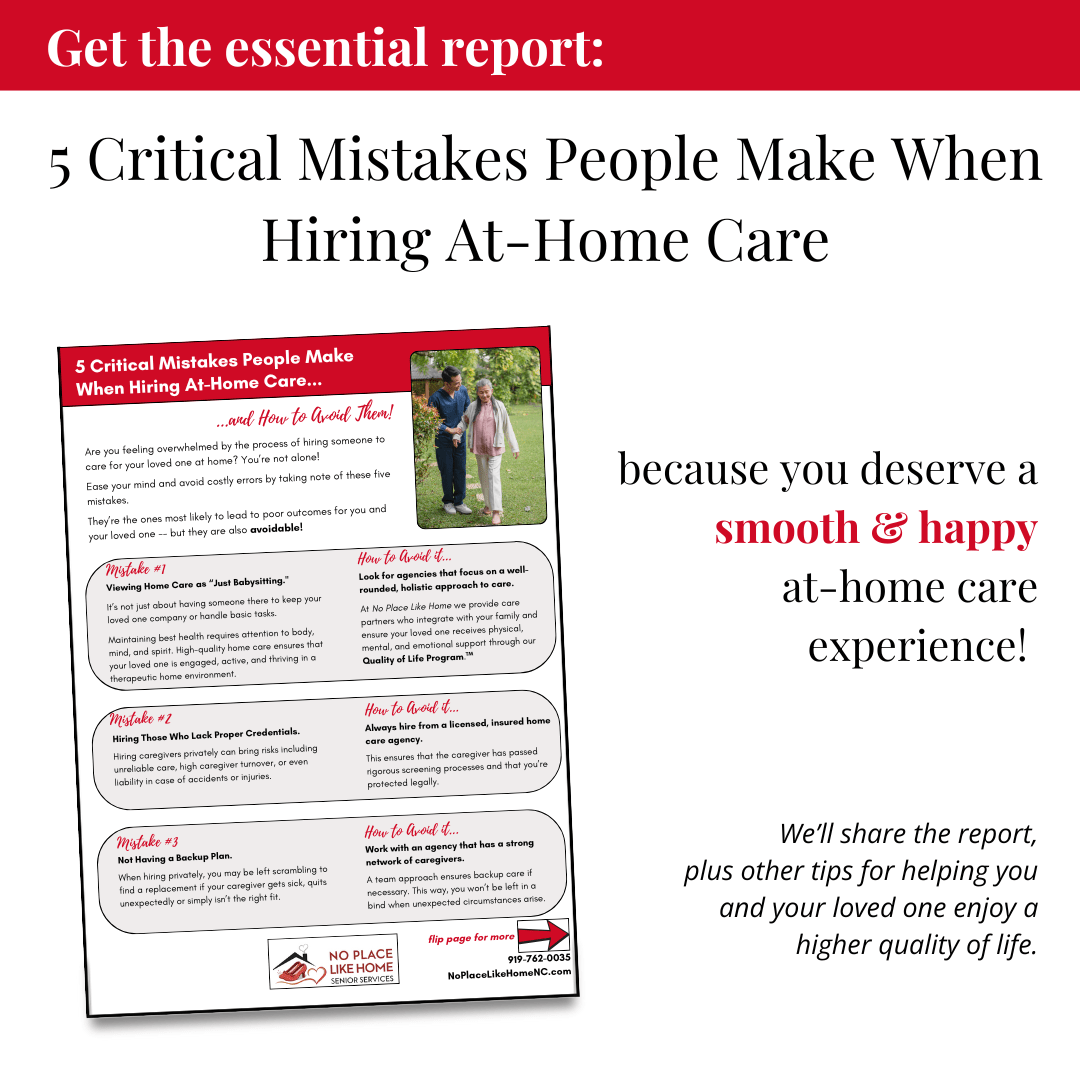
Complete the form below; we'll email you the report right away.
